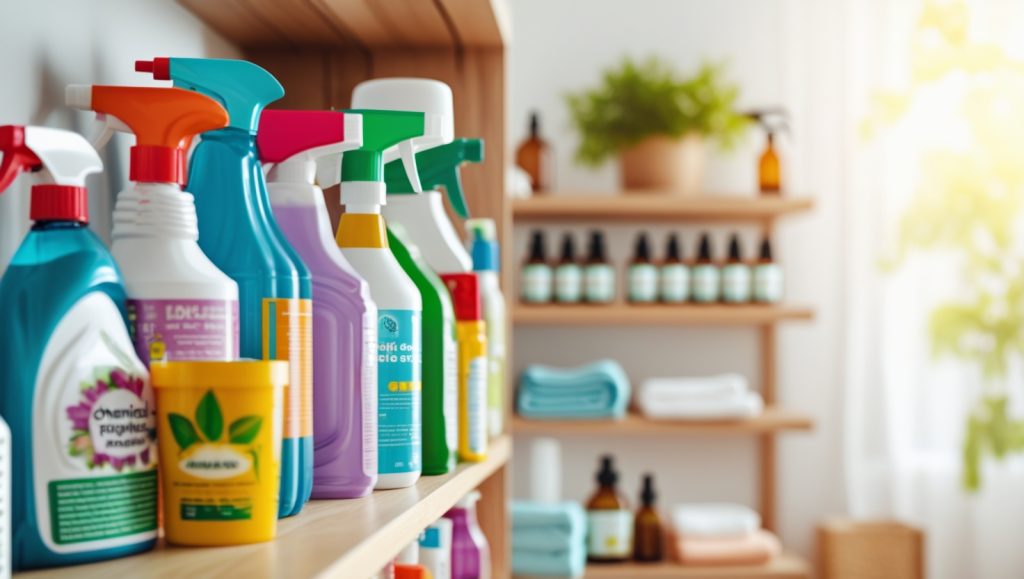
Our homes are supposed to be sanctuaries—safe, clean, and nurturing spaces where we can rest and recharge. But what if the very products we use to create that sense of comfort are quietly sabotaging our health?
The truth is, many everyday household products are filled with hidden toxins that can negatively impact your indoor air quality, skin, respiratory system, hormones, and overall well-being. From harsh cleaning chemicals to synthetic fragrances, our modern lifestyles expose us to a cocktail of pollutants that we often don’t even notice.
The good news? You have the power to change that. Here are some of the top toxic products to ditch and safer alternatives to help you create a healthier, happier home environment.
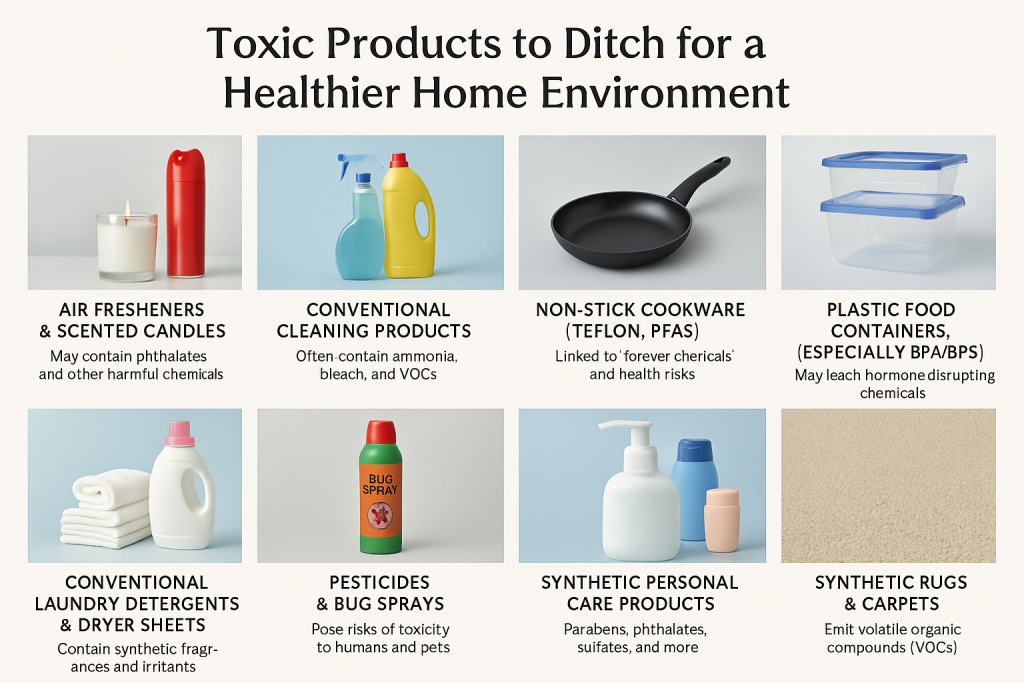
1. Air Fresheners & Scented Candles
Why They’re Harmful:
Air fresheners, plug-ins, and many scented candles may contain phthalates, formaldehyde, and benzene—toxic chemicals linked to respiratory problems, hormone disruption, and even cancer. Synthetic fragrances are also major triggers for people with asthma or allergies.
Healthier Swap:
- Use essential oil diffusers with pure oils like lavender, eucalyptus, or citrus.
- Make your own natural room spray with water, witch hazel, and essential oils.
- Choose beeswax or soy candles with cotton wicks and natural scents.
2. Conventional Cleaning Products
Why They’re Harmful:
From multi-surface sprays to toilet bowl cleaners, many contain ammonia, bleach, and VOCs (volatile organic compounds). These can irritate your lungs and eyes and contribute to indoor air pollution.
Healthier Swap:
- Go green with eco-friendly brands like Seventh Generation, Ecover, or Branch Basics.
- DIY your own with vinegar, baking soda, and lemon juice—they clean just as effectively without the side effects.
3. Non-Stick Cookware (Teflon and PFAS)
Why They’re Harmful:
Non-stick coatings often contain PFAS (per- and polyfluoroalkyl substances), known as “forever chemicals” because they don’t break down. They can leach into food and have been linked to cancer, liver damage, and developmental issues.
Healthier Swap:
- Opt for stainless steel, cast iron, or ceramic-coated cookware.
- Season your cast iron pans properly and they’ll perform nearly as well as non-stick—minus the toxins.
4. Plastic Food Containers (Especially BPA/BPS)
Why They’re Harmful:
Plastic containers often contain BPA or BPS, chemicals that mimic estrogen and can disrupt the endocrine system. Heating or scratching them can cause these chemicals to leach into food.
Healthier Swap:
- Use glass, stainless steel, or silicone containers.
- Never microwave plastic containers or put them in the dishwasher unless labeled BPA-free.
5. Conventional Laundry Detergents & Dryer Sheets
Why They’re Harmful:
Most laundry detergents and dryer sheets are filled with synthetic fragrances, dyes, and surfactants that can irritate skin, trigger allergies, and pollute waterways.
Healthier Swap:
- Choose fragrance-free or plant-based detergents.
- Use wool dryer balls with a few drops of essential oil instead of dryer sheets.
6. Pesticides & Bug Sprays
Why They’re Harmful:
Many over-the-counter pest control sprays contain neurotoxins and endocrine disruptors that linger on surfaces and can be inhaled by pets and children.
Healthier Swap:
- Use natural pest deterrents like diatomaceous earth, essential oils (peppermint, citronella), or vinegar.
- Seal cracks and use screens to keep pests out naturally.
7. Synthetic Personal Care Products
Why They’re Harmful:
Shampoos, lotions, deodorants, and cosmetics often contain parabens, phthalates, sulfates, and synthetic dyes—many of which are absorbed through your skin.
Healthier Swap:
- Switch to natural or organic brands that are free from these harmful ingredients.
- Look for EWG-certified products or use the Think Dirty app to scan product safety ratings.
8. Flame Retardant Furniture and Bedding
Why They’re Harmful:
Couches, mattresses, and even pajamas may be treated with PBDEs (polybrominated diphenyl ethers)—flame retardants linked to thyroid dysfunction, infertility, and neurodevelopmental issues.
Healthier Swap:
- Choose furniture made without added flame retardants.
- Use organic mattresses and natural fiber bedding like cotton, wool, or latex.
9. Antibacterial Soaps & Hand Sanitizers
Why They’re Harmful:
Products with triclosan or triclocarban have been banned in some countries due to concerns about antibiotic resistance and hormone disruption. Plus, they’re no more effective than regular soap.
Healthier Swap:
- Use simple, gentle soaps with minimal ingredients.
- For sanitizers, choose alcohol-based versions with moisturizing ingredients like aloe vera.
10. Synthetic Rugs & Carpets
Why They’re Harmful:
New carpets and rugs made with synthetic fibers often release VOCs and other harmful chemicals into the air through off-gassing.
Healthier Swap:
- Opt for natural fiber rugs made from wool, cotton, or jute.
- Let new carpets air out thoroughly before using them, or shop for low-VOC certified options.
Final Thoughts: Small Changes, Big Impact
Creating a healthier home environment doesn’t mean throwing everything out and starting from scratch. It’s about making informed choices and gradually swapping toxic products for safer alternatives. Each change you make reduces your exposure to harmful chemicals and brings you closer to a more natural, health-conscious lifestyle.
By ditching just a few of these common culprits, you’re taking meaningful steps toward improving your well-being—and that of your family and even your pets. After all, a healthier home leads to a healthier you.
| Also Read: The Best Fitness Gear for Busy Moms Working Out at Home