
In our fast-paced, modern world, it’s easy to reach for over-the-counter medications for every little health hiccup. While there’s certainly a time and place for conventional medicine, many people are rediscovering the healing power of natural remedies—time-tested solutions that can help ease everyday ailments without the side effects of synthetic drugs.
From headaches and digestion troubles to colds and stress, natural remedies often provide gentle, effective relief. In this blog post, we’ll explore some of the most common health problems Americans face and offer holistic, accessible ways to manage them using herbs, foods, and lifestyle practices.
Disclaimer: Natural remedies can complement medical treatment, but they are not substitutes for professional medical advice. Always consult your healthcare provider before starting any new treatment.
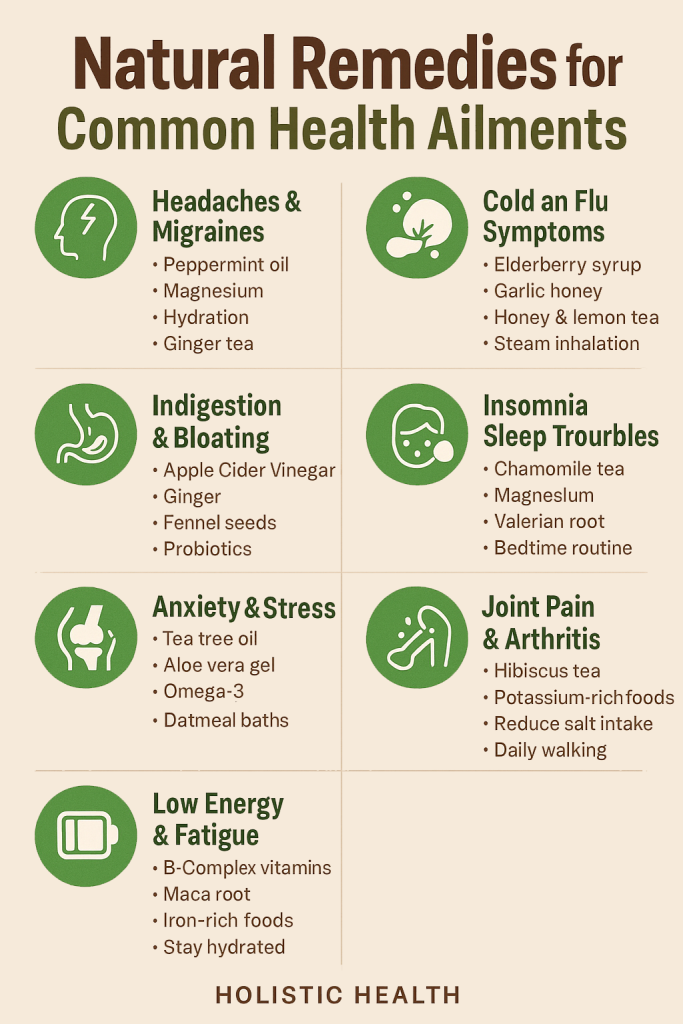
1. Headaches and Migraines
The Problem: Headaches affect millions of Americans daily, and migraines can be debilitating. Common triggers include stress, dehydration, poor posture, and diet.
Natural Remedies:
- Peppermint Oil: Applying diluted peppermint oil to your temples can provide a cooling sensation and increase blood flow, easing tension headaches.
- Magnesium: Studies show that magnesium deficiency is linked to migraines. Taking 200–400 mg of magnesium glycinate daily may help reduce frequency and severity.
- Hydration: Dehydration is a common but overlooked cause of headaches. Drink at least 8 glasses of water a day, more if you consume caffeine or alcohol.
- Ginger Tea: Known for its anti-inflammatory effects, ginger can help relieve migraine symptoms, including nausea.
2. Cold and Flu Symptoms
The Problem: While the common cold and flu are usually not serious, they can be incredibly disruptive, especially during colder months.
Natural Remedies:
- Elderberry Syrup: Elderberry has antiviral properties and can shorten the duration of cold and flu symptoms if taken early.
- Garlic: A natural antimicrobial, garlic boosts the immune system. Try adding raw garlic to honey or meals.
- Honey and Lemon Tea: Soothe sore throats and calm coughs with a warm mix of honey, lemon, and ginger.
- Steam Inhalation: Add eucalyptus or tea tree oil to hot water and inhale the steam to relieve nasal congestion.
3. Indigestion and Bloating
The Problem: Indigestion and bloating are common complaints, often linked to poor eating habits, stress, or food intolerances.
Natural Remedies:
- Apple Cider Vinegar (ACV): Taking a teaspoon of ACV in warm water before meals may help stimulate digestion and reduce bloating.
- Ginger: Ginger tea or fresh ginger in food helps stimulate digestive enzymes.
- Fennel Seeds: Chew a teaspoon of fennel seeds after meals to reduce gas and aid digestion.
- Probiotics: Foods like yogurt, kefir, and sauerkraut support gut health and reduce bloating.
4. Insomnia and Sleep Troubles
The Problem: Over 70 million Americans suffer from sleep disorders. Poor sleep affects mood, focus, and long-term health.
Natural Remedies:
- Chamomile Tea: A well-known calming herb, chamomile can help promote restful sleep.
- Magnesium Supplements: Magnesium helps relax the nervous system. Try magnesium citrate or glycinate before bed.
- Valerian Root: This herbal sedative is often used in natural sleep aids to improve sleep quality.
- Bedtime Routine: Limit screens an hour before bed, dim the lights, and establish a consistent sleep schedule.

5. Anxiety and Stress
The Problem: Stress and anxiety are major health challenges in the U.S., impacting mental and physical well-being.
Natural Remedies:
- Ashwagandha: This adaptogenic herb has been shown to lower cortisol levels and improve resistance to stress.
- Lavender Oil: Aromatherapy using lavender essential oil may help reduce anxiety and promote calm.
- Deep Breathing Exercises: Practice 4-7-8 breathing (inhale 4 sec, hold 7, exhale 8) to activate the relaxation response.
- Exercise: A brisk walk, yoga, or strength training releases endorphins and naturally reduces anxiety.

6. Skin Issues: Acne and Eczema
The Problem: Whether it’s teenage acne or adult eczema, skin issues can affect confidence and quality of life.
Natural Remedies:
- Tea Tree Oil: A natural antibacterial, tea tree oil helps reduce acne when applied topically in diluted form.
- Aloe Vera Gel: Soothes inflamed, itchy skin and supports healing for eczema and sunburns.
- Omega-3 Fatty Acids: Found in flaxseeds, chia seeds, and fish oil, omega-3s help reduce inflammation in the skin.
- Oatmeal Baths: Add colloidal oatmeal to a warm bath to relieve eczema symptoms and itching.
7. Joint Pain and Arthritis
The Problem: Chronic joint pain and arthritis impact mobility and quality of life, especially as we age.
Natural Remedies:
- Turmeric: Contains curcumin, a powerful anti-inflammatory compound. Take it with black pepper to improve absorption.
- Epsom Salt Baths: Rich in magnesium, Epsom salts help relax muscles and reduce joint pain when added to warm baths.
- Massage with Essential Oils: Oils like eucalyptus or frankincense may reduce stiffness when massaged into joints.
- Anti-Inflammatory Diet: Focus on leafy greens, berries, salmon, and nuts. Avoid sugar and processed foods.
8. High Blood Pressure (Hypertension)
The Problem: Nearly half of U.S. adults have high blood pressure, a major risk factor for heart disease.
Natural Remedies:
- Hibiscus Tea: Drinking 2–3 cups of hibiscus tea daily may help lower blood pressure naturally.
- Potassium-Rich Foods: Bananas, sweet potatoes, and spinach help balance sodium and support heart health.
- Reduce Salt Intake: Cut back on processed foods, which are high in hidden sodium.
- Daily Walking: Just 30 minutes of brisk walking a day can significantly lower blood pressure.

9. Low Energy and Fatigue
The Problem: Many Americans feel constantly tired, even with enough sleep. Causes range from poor diet to chronic stress.
Natural Remedies:
- B-Complex Vitamins: B12 and B6 are essential for energy production. Look for a high-quality B-complex supplement.
- Maca Root: Traditionally used in Peru, maca supports energy and endurance naturally.
- Iron-Rich Foods: Fatigue may be due to low iron. Include lentils, spinach, and red meat in your diet.
- Stay Hydrated: Even mild dehydration can drain your energy. Keep a water bottle nearby.
10. Constipation
The Problem: Occasional constipation is common, especially with a low-fiber diet or sedentary lifestyle.
Natural Remedies:
- Psyllium Husk: A natural fiber supplement that adds bulk and promotes regular bowel movements.
- Prunes or Prune Juice: Nature’s laxative, prunes are rich in fiber and sorbitol, which stimulate digestion.
- Warm Lemon Water: Kick-start your digestive system each morning with a glass of warm water and lemon.
- Regular Exercise: Physical activity helps keep your bowels moving regularly.
Tips for Using Natural Remedies Safely
While these remedies are generally safe, here are a few guidelines to follow:
- Start Slow: Introduce one new remedy at a time to monitor your body’s response.
- Check for Allergies: Always do a patch test for topical remedies or check for food allergies.
- Consult a Professional: If you are pregnant, nursing, or taking medications, speak with a doctor or licensed herbalist.
- Use Quality Products: Choose organic, reputable brands to avoid contaminants.
Why Americans Are Turning to Natural Remedies
A growing number of U.S. adults are seeking alternatives to pharmaceutical drugs due to:
- Rising healthcare costs
- Increased awareness of side effects from synthetic drugs
- A desire for holistic, preventative care
- Interest in sustainability and plant-based living
Natural remedies align well with the philosophy of treating the root cause—not just the symptoms.
Final Thoughts: A Holistic Approach to Health
Natural remedies can be powerful tools in your wellness toolkit, but they work best as part of a holistic lifestyle. Eating whole foods, getting regular exercise, managing stress, and maintaining a positive mindset all play key roles in staying healthy.
If you’re new to the world of natural healing, start small. Maybe it’s swapping your second cup of coffee for a calming herbal tea, or using lavender oil in your bedtime routine. Over time, these simple changes can add up to major health improvements.
Your body was designed to heal—it just needs the right support.